

Roof trouble in Massachusetts has a personality. It doesn’t politely show up on a sunny Saturday when you have time to research. It shows up during a sideways-rain nor’easter, right when your ceiling decides to audition for a dripping sound effect.
And then the real chaos begins: Do you file an insurance claim? Do you finance it? Do you do both? And why does everyone—your neighbor, your cousin, the guy at the hardware store—have a completely different answer?
Let’s make this simple, local, and actually useful.
Why This Topic Gets Messy Fast in Massachusetts
Massachusetts roofing costs aren’t just “materials + labor.” The state’s weather and housing stock add layers—sometimes literally.
The “two clocks” problem: weather urgency vs paperwork speed
Your roof damage runs on weather time: “Fix this before the next storm.”
Insurance runs on paperwork time: “We’ll review, inspect, estimate, approve…”
Those clocks don’t sync. If you wait for the perfect claim process, water can turn your attic into a damp science experiment. If you rush without documentation, you can end up paying for damage your policy might have covered.
Why Andover homes get hit with repeat stressors
Andover roofs deal with:
- heavy snow loads and melt cycles
- ice dam conditions (heat escaping + refreeze at the eaves)
- wind events that lift shingles like a loose sticker
- freeze-thaw that punishes flashing, sealants, and weak spots
Ice dams are so common here that Massachusetts has its own guidance on what causes them and how to reduce them. mass.gov
First: Is Your Roof Damage Even “Insurance-Worthy”?
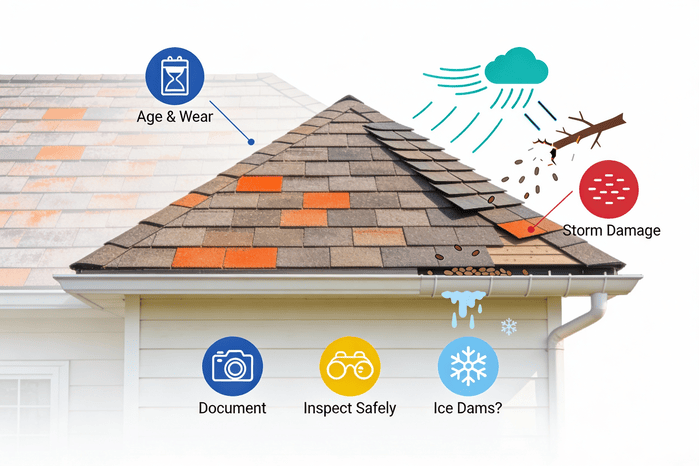
Here’s the blunt truth: insurance usually likes sudden and accidental. It does not like “this roof is old and tired.”
Storm damage vs wear-and-tear (the line nobody explains well)
If shingles fail because they’ve reached retirement age, insurers often treat it as maintenance. If shingles fail because wind ripped them off on a specific date, that’s a different conversation.
The quick sniff test homeowners can do before calling
Walk outside (or look with binoculars—seriously, don’t climb if you’re not used to it) and ask:
- Do you see missing shingles or clear creases (wind lift)?
- Do you see fresh granules piled in gutters/downspouts?
- Is there tree impact or debris damage?
- Did the leak start right after a known storm window?
If the answer is “maybe,” don’t panic. Just document like a detective:
- wide shots (whole roof planes)
- close-ups (shingle edges, flashing, penetrations)
- interior (stains, wet insulation, bubbling paint)
Ice dams: when they’re covered and when they’re not
Ice dams are tricky because they can be seen as a result (water backing up) caused by a condition (poor insulation/air leaks). Prevention guidance emphasizes air sealing, insulation, and ventilation. mass.gov+1
Coverage depends on your policy language and what exactly was damaged. Translation: don’t assume “yes” or “no” based on one friend’s story.
ACV vs RCV: The Two Payout Styles That Change Everything
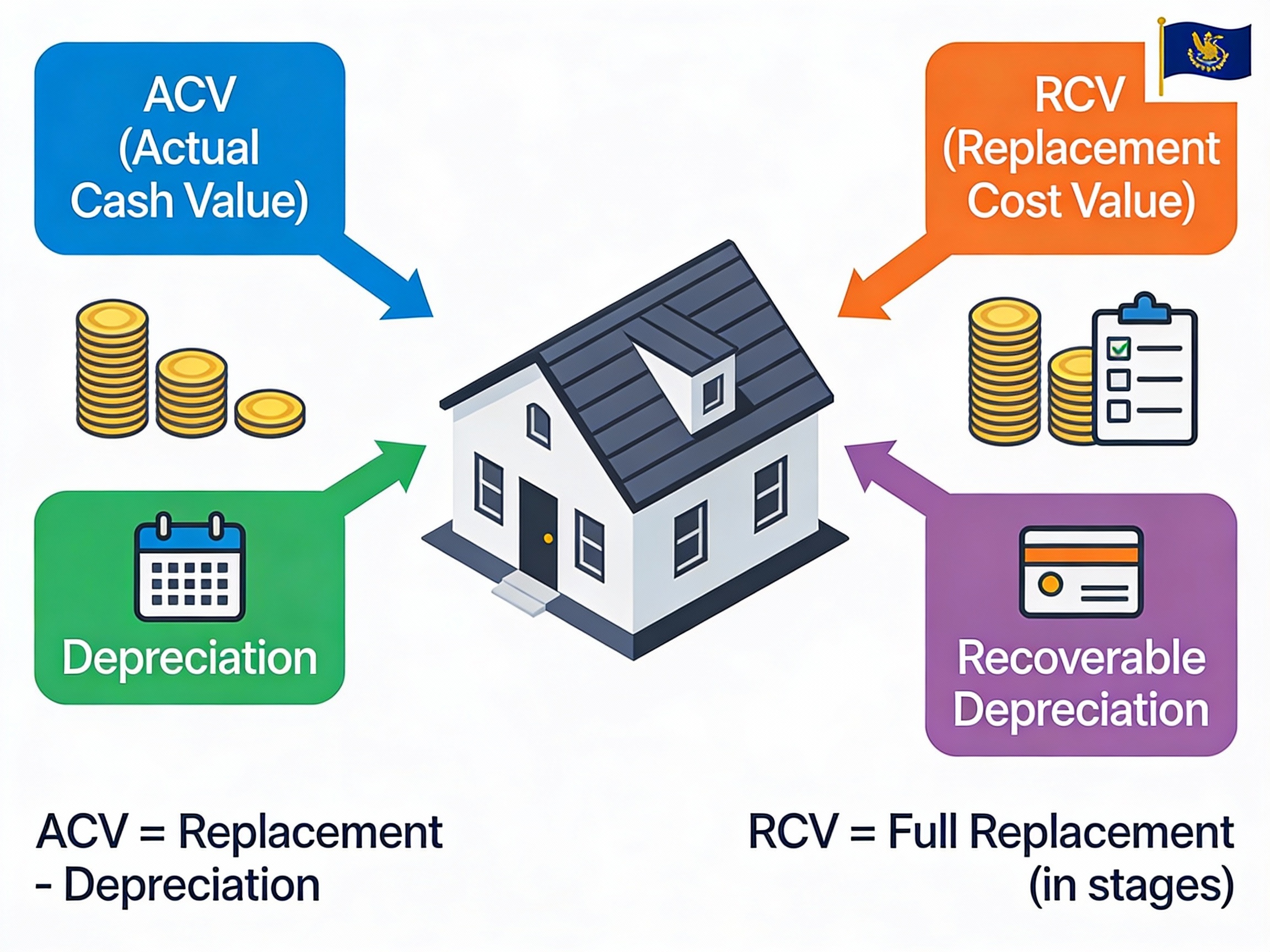
If you understand nothing else in this article, understand this part. It controls the size of your check.
What Actual Cash Value really means for older roofs
Actual Cash Value (ACV) is basically: replacement cost minus depreciation. Older roofs can get hit hard.
The National Association of Insurance Commissioners (NAIC) explains that ACV reflects age/wear (depreciation), which often means the payout won’t fully replace what you lost. content.naic.org
What Replacement Cost Value pays (and why it comes in stages)
Replacement Cost Value (RCV) is closer to “what it costs today to replace it.” But many policies pay it in phases:
- initial payment (often ACV portion first)
- then the remaining amount after you prove the work was completed (the “recoverable depreciation”)
Massachusetts also has consumer guidance on how claim payments can work and why adjusters start with ACV in many cases. mass.gov+1
Deductibles in MA: The Part That Makes People Say “Never Mind”
Deductibles sound simple… until you’re staring at a $3,500 out-of-pocket surprise.
Flat deductibles vs percentage deductibles
Some policies use a flat deductible (ex: $1,000). Others use a percentage based on insured value for certain events. This varies by carrier and endorsement, so you’ll want to read the declarations page, not guess.
Should you file a claim or self-pay? A simple decision rule
Try this quick rule:
- If the repair/replacement cost is only slightly above your deductible, filing may not be worth the claim history.
- If the damage is clearly storm-related and meaningfully exceeds your deductible, it’s usually time to at least discuss the claim path.
Not financial advice—just common-sense triage.
The Claim Timeline: What Happens After You Call
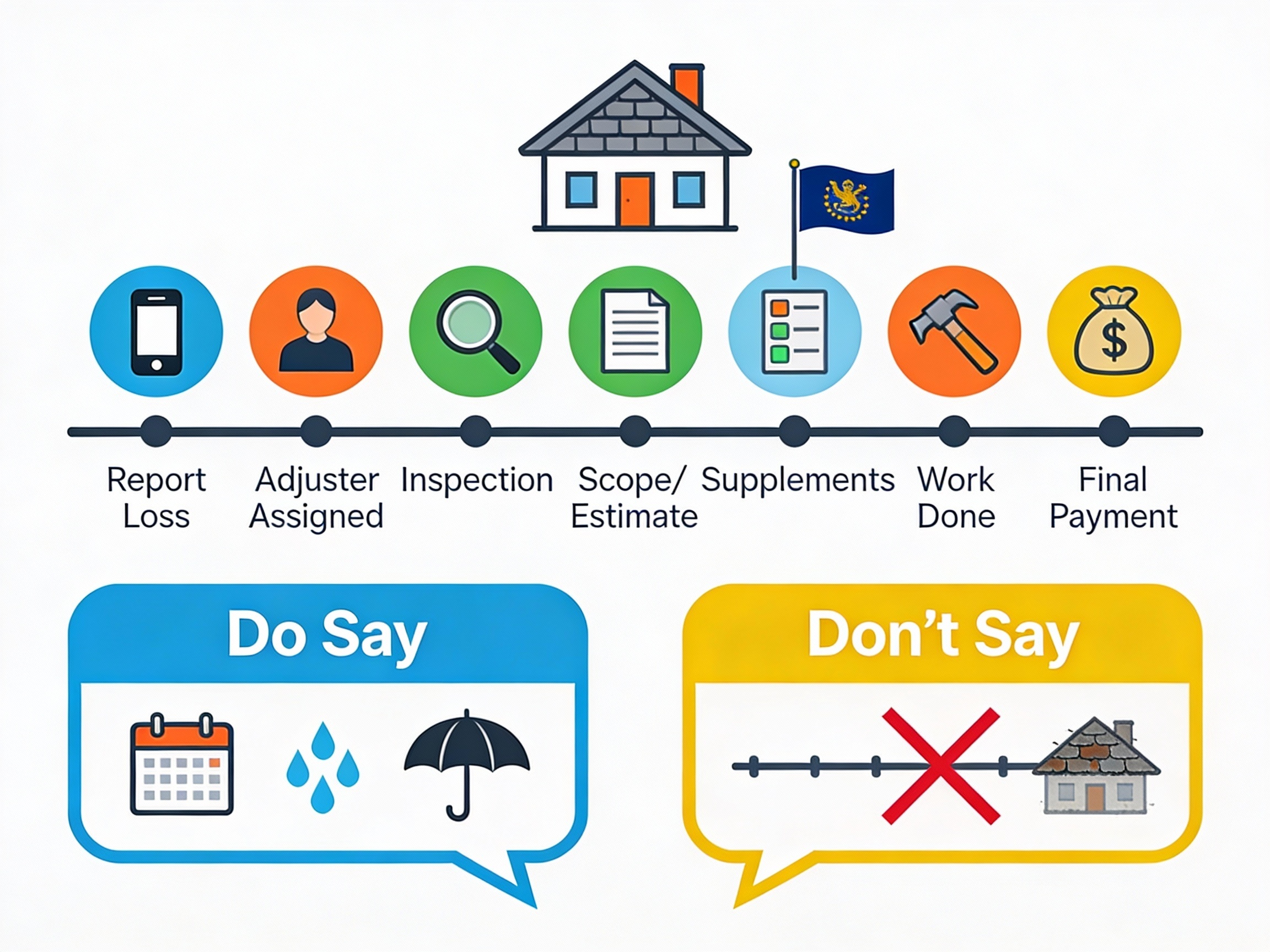
Massachusetts outlines the broad “how claim payments work” flow: report, inspection, evaluation, payment, and follow-up documentation. mass.gov
Here’s how it feels in real life:
Step-by-step: from first notice of loss to closing
- You report the loss (date matters)
- Adjuster is assigned
- Inspection happens
- You receive a scope/estimate
- You compare it to contractor estimate
- Supplements (if needed) get reviewed
- Work is done
- Final paperwork triggers the last payment (if RCV structure)
What to say (and not say) on the first call
Do say:
- the date range you noticed damage
- what you observed (missing shingles, leak began after storm)
- that you’re taking steps to prevent further damage
Don’t say:
- “This roof was failing anyway” (even if it was… don’t volunteer a denial reason)
- “I’m not sure when it happened but it’s been months” (unless true—then focus on what you know)
Adjuster visit: how to prepare your home and your documents
Have ready:
- your photos
- any prior roof repair receipts
- interior leak photos
- contractor inspection notes (if you have them)
And yes—being organized helps. Not because the adjuster is evil. Because everyone is busy and details get missed.
Estimates, Scopes, and Supplements: The Real Chess Game
Why contractor estimates don’t match adjuster numbers
Different people write estimates differently. A roofer might include:
- full flashing replacement
- ventilation upgrades
- ice & water shield extensions
- better underlayment
- code-related items
An adjuster scope may start leaner, then expand with documentation.
Supplements (not “upselling”) and how they work
A supplement is basically: “Here’s what we found once we got closer.” It can include code-required upgrades, concealed damage, or items missed in initial scope.
This isn’t automatically shady. It’s often normal—especially on older Andover homes where layers and surprises exist.
Ordinance or Law Coverage: The Quiet Line Item That Saves Budgets
This is where Massachusetts building code reality bumps into your budget.
Code upgrades, permits, and why 780 CMR can affect cost
Massachusetts building code provisions exist for roof assemblies and installation standards. mass.gov
And code-related changes can mean you can’t just “patch it like it was 1998.”
Roof layers and tear-off realities
Some towns spell it out plainly: re-shingling still triggers code sections, and multiple layers may require removal before adding new roofing. Bedford MA
If your policy includes ordinance or law coverage, it can help cover additional costs tied to code compliance. If you don’t have it, those upgrades can land on your wallet.
“Matching” Shingles and Materials: The Aesthetic Fight
You’d think this is cosmetic. It becomes a resale and curb appeal issue fast.
When insurers pay to match
Some carriers may allow matching when a partial repair creates an obvious mismatch—others resist. The outcome depends on policy language, documentation, and practicality.
How to document mismatch properly
- Photograph from street view (what buyers would see)
- Capture color variation in natural daylight
Provide manufacturer “discontinued color” notes if relevant
Financing Options for Andover Roof Replacement

Sometimes the roof needs replacing even if insurance says “nope.” Or you’re waiting on claim money and don’t want your house exposed.
Contractor financing vs bank loan vs home equity
Here’s the simple breakdown:
- Contractor financing: convenient, fast, often promo terms—but read the fine print.
- Personal loan / bank loan: predictable payments, may depend on credit.
- Home equity: can be competitive, but takes time and paperwork.
Promotional rates: what to watch for
A “0% for 12 months” offer can be great… or a trap, depending on what happens after the promo window.
The “monthly payment trap” checklist
Before saying yes, ask:
- What’s the APR after promo ends?
- Is interest deferred (meaning it accrues anyway)?
- Any early payoff penalties?
- Any dealer/processing fees folded into the price?
If answers feel slippery, that’s your sign.
Can You Finance the Deductible? The Straight Answer
If someone suggests “don’t worry about the deductible, we’ll handle it,” slow down.
Some practices around “waiving deductibles” can create legal/ethical issues and can cause claim friction. Safer path: pay your deductible, keep documentation clean, keep invoices honest.
(Also: if a roofer is casual about this, what else are they casual about?)
Insurance + Financing Together: The Smart Coordination Plan
This is how homeowners avoid cash-flow whiplash.
Bridging the gap while waiting for claim funds
If you’re waiting for claim processing but need work done:
- finance the project temporarily
- pay it down when claim checks arrive
- keep all receipts and completion documents tidy
Timing deposits, materials, and checks
Some claim checks are issued jointly (homeowner + mortgage company). That can add time. Plan for it so you’re not stuck mid-project.
Choosing a Roofer for Claim Work (Without Regretting It)
Not every roofer is built for insurance work. Some are amazing installers but hate paperwork. Others are paperwork kings but cut corners. You want both.
Questions that expose whether a contractor understands insurance
Ask:
- “Do you provide photo documentation and a line-item scope?”
- “How do you handle supplements if hidden damage shows up?”
- “Do you coordinate adjuster meetings if needed?”
Proof packets: photos, ventilation notes, and documentation
A good contractor can explain practical realities: ventilation, ice dam risk, and what’s actually happening up there.
If you need to start with an urgent fix, emergency roofing support matters first. (https://zenroofingco.com/emergency-roofing-andover-ma)
Paperwork Homeowners Forget (Then Pay for Later)
This is where claims and warranties get weird later.
Photos, receipts, maintenance proof
Keep:
- before/during/after photos
- final invoice with clear scope
- material brand/model notes
- any attic ventilation improvements
Massachusetts has public-facing resources on home insurance basics and claim payments—worth bookmarking if you’re in a claim year. mass.gov+1
Certificates, warranties, and final invoice language
Make sure your contractor provides:
- completion certificate
- warranty registration steps
- proof of payment (especially if you’re collecting recoverable depreciation)
For ongoing upkeep, a maintenance mindset saves money long-term. (Internal: https://zenroofingco.com/maintenance)
Quick Scenarios Andover Homeowners Ask About
“One slope is damaged—do I need the whole roof?”
Sometimes only one side is truly damaged. But factors like matching, age, and practicality can push decisions either way. Document everything and get a clear explanation from both contractor and insurer.
“My roof is old—will they deny me automatically?”
Not automatically. But ACV/RCV structure matters a lot with older roofs. Massachusetts and NAIC materials explain the difference between replacement cost and actual cash value and why it impacts payouts. mass.gov+1
“The leak showed up weeks later—am I too late?”
Not necessarily, but the story needs to be accurate and well-documented. Leaks can present after a storm once water finds its pathway.
If you’re unsure whether you’re dealing with repairable damage vs end-of-life roofing, it helps to read up on what inspections usually include. (Internal: https://zenroofingco.com/zen-roofing-blog/roof-inspections-in-massachusetts-when-why-and-what-to-expect)
A Simple Roof Replacement Money Plan You Can Use Tonight
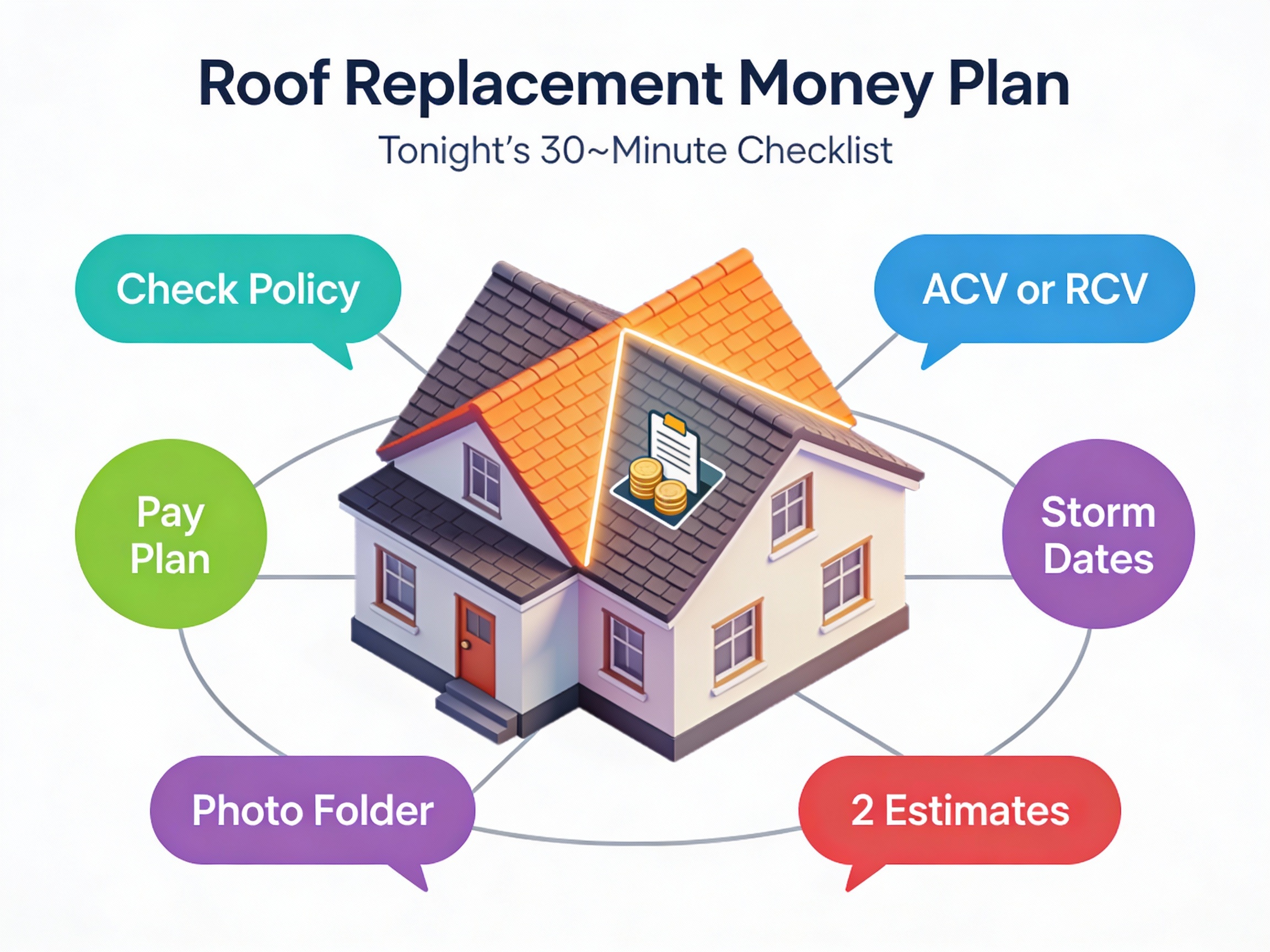
The 30-minute checklist
Grab a notebook. Do this in one sitting:
- ✅ Find your policy declarations page (deductible + endorsements)
- ✅ Note ACV vs RCV (or call your agent and ask)
- ✅ Pull storm dates you suspect (even approximate)
- ✅ Take and organize photos in one folder
- ✅ Get 2 written estimates (not just verbal)
- ✅ Decide: claim, finance, or combo
Mini budget table
Here’s a practical way to think about your cash flow:
FAQs